top of page

RESEARCH HIGHLIGHTS
Eco-evolutionary trajectories of host-microbiome interactions


In this study I investigated the complex interactions between host and their microbiome, focusing on Chinook salmon as an animal model. We used antibiotic and probiotic treatments to manipulate the gut microbiome and measured the effects on the gut microbial community and host gene expression using metatranscriptomics analysis. This study helps to better understand coevolutionary processes that shape the symbiotic relationship between hosts and their microbiome. The ability to modulate the gut microbiome opens new avenues for improving host health and overall fitness while reducing disease resistance.
I characterized fish-associated microbiomes and assessed their relationship to surrounding water communities. This work revealed patterns of phylosymbiosis, showing that host species, habitat, diet, and environmental factors shape microbial composition. These findings provide insight into host–microbiome co-evolution and highlight the potential of non-invasive sampling (e.g., skin swabs) for monitoring fish health and conservation.
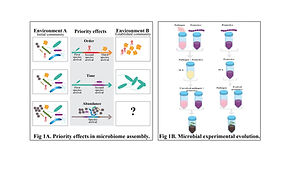
Ecological theory suggests that community development is often influenced by priority effects, in which the order and timing of species arrival determine how species affect one another. Indeed, priority effects can have substantial consequences, particularly if species arrival history changes during the early stage of community development. However, their importance to the tomato phyllosphere microbiome and plant health remains largely unknown. For example, the degree to which early-arriving species in phyllosphere can resist invasion by pathogens is not known.
Coming soon
bottom of page