
Teaching
I teach microbiology, genetics, and bioinformatics with an emphasis on integrating molecular biology, and hands-on laboratory experience.
University of Toronto

Course Instructor:
Environmental Microbiology (EESC30H3, Co-instructed):
Course overview
Explores microbial diversity, adaptations to environmental conditions, and their roles in ecosystems and biogeochemical cycles. Topics include microbial phylogeny, physiological diversity, species interactions, and modern methods for detection and analysis.
Key topics and skills
-
Microbial diversity and ecological roles across environments
-
Classical and emerging methods in environmental microbiology
-
Microbial interactions and ecosystem processes
-
Application of microbiome research in environmental management
-
Critical analysis of primary literature
-
Introduction to bioinformatics tools for microbiome data
Teaching approach: Emphasis on integrating conceptual understanding with data analysis and real-world environmental applications.
Content Development and Teaching:
Microorganisms and the Environment (EES1104H, Winter 2024):
-
Delivered a guest lecture on microbiome applications in sustainable environments and One Health frameworks
-
Designed and taught practical sessions on metagenomic analysis (Kraken2, FastQC, HUMANN3)
-
Trained graduate students in computational workflows using Jupyter Notebooks and GitHub
-
Introduced approaches for linking microbial community structure to functional potential
Back to the Land: Restoring Embodied and Affective Ways of Knowing (ESTB03H3)
-
Contributed to course content connecting microbiome science with sustainability and environmental health
-
Delivered a guest lecture on microbial roles in ecosystem resilience and One Health perspectives
-
Engaged students in interdisciplinary discussions bridging science, environment, and society
University of Windsor

Course Instructor:
Applied Ecological Genetics (BIOL 4008-7, Winter 2021, Winter 2022):
Ecological, Evolutionary & Environmental Genetics (BIOL 4008-7, Winter 2019):
Course Content
The course was structured into three integrated modules:
-
Ecological genetics: population genetics, conservation genetics, invasion biology
-
Evolutionary genetics: quantitative genetics, trait mapping, epigenetics
-
Environmental genetics: eDNA, metabarcoding, metagenomics, and microbial community analysis
Teaching Approach
-
Combined lectures with in-class problem-solving and applied assignments
-
Emphasized project-based learning, where students designed and executed their own research projects
-
Integrated next-generation sequencing and bioinformatics tools into coursework
-
Encouraged collaborative learning through student-led “research teams”
Student Research Experience
Students developed independent research projects involving:
-
Experimental design and hypothesis generation
-
Field sampling and molecular workflows
-
Bioinformatics and data analysis
-
Scientific writing and presentation
Projects culminated in manuscript-style reports, with several leading to peer-reviewed publications.

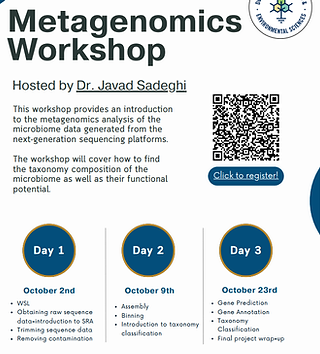
Bioinformatics Workshop


R programming Coming soon.

EDI and outreach activities
_svg.png)

